












Our services can help with tree care and maintenance such as pruning, crown cleaning, shaping, cabling and bracing, fertilization, and even disease prevention.
Stump removal can be daunting, but it doesn't have to be. With our stump grinder equipment, we can quickly get rid of those eyesores.
A fallen tree can be scary and overwhelming, but with the help of our emergency services, you don’t have to worry about tackling it alone.
If you need to free up some space in your yard or get ready for a construction project, let’s give you a clean slate.

Junior and his crew with T & J did a fantastic job removing a large tree from my property that didn't have crane access. Price was more affordable than any other contractor I contacted. Highly recommend these guys. Thanks Junior!
Excellent service. Removed 4 trees in my backyard. The team was fantastic, extremely professional. Highly recommend T&J, even if you have hard to reach trees. 10/10 experience.
Could not be happier with the service provided. Junior and his crew were in and out within an hour, taking down two full grown Leyland Cypresses including a stump grind. Top notch!
When you choose T & J Tree Experts LLC, you can trust that your property is in good hands. Our team uses only the best equipment and follows strict safety protocols to ensure that every job is completed efficiently and safely. All work performed and the cost is exactly as quoted. You won’t find us adding extra charges at the end for work unknown. For each job, we show up with an eagerness to work hard and we don’t quit until your tree project is completed. If it takes more than one day, we keep things cleaned up from one day to the next. And being locally owned and having 11+ years of experience only adds to our ability to provide excellent customer service. Residents in Memphis, TN, and Shelby County consistently rely on our experts for a job well done.
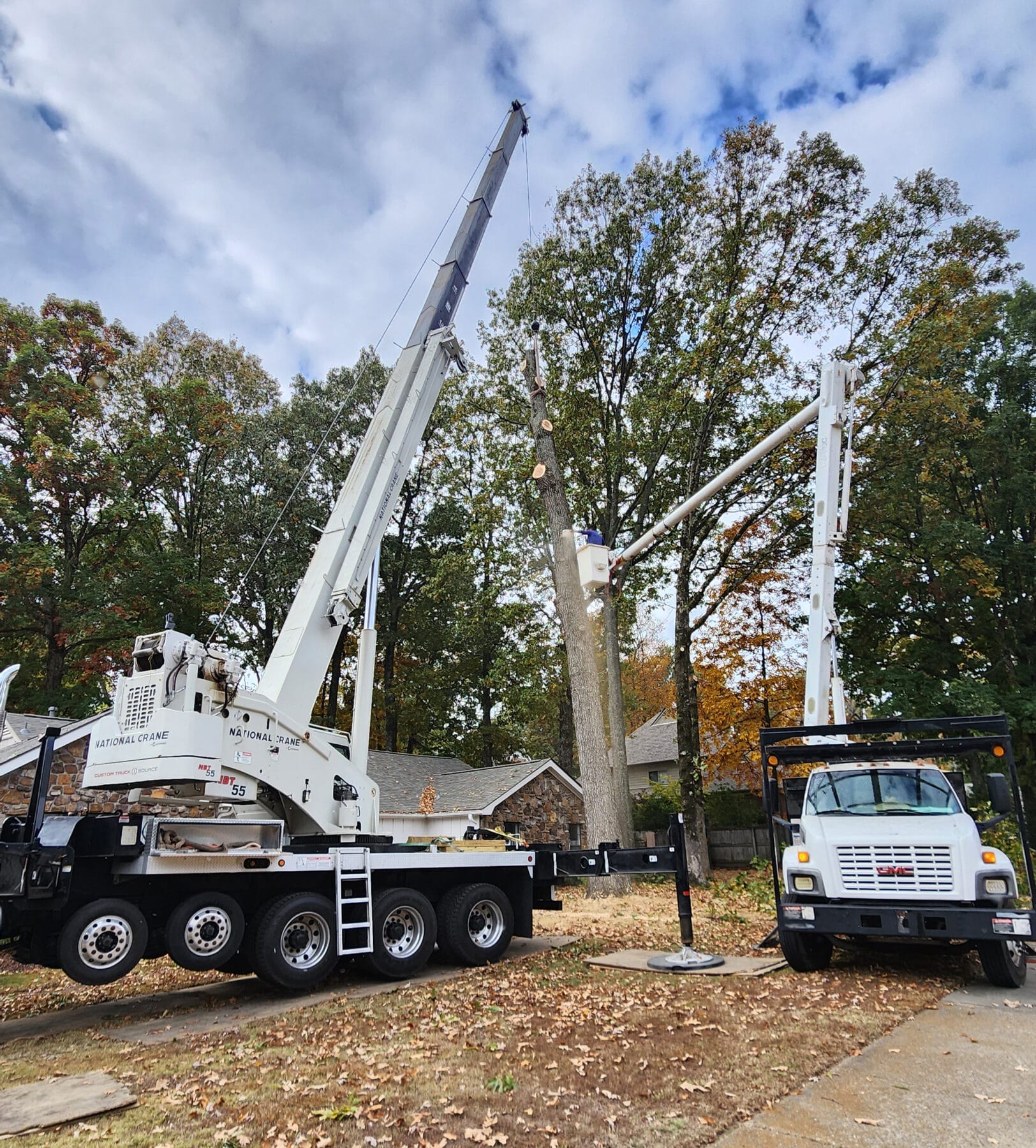
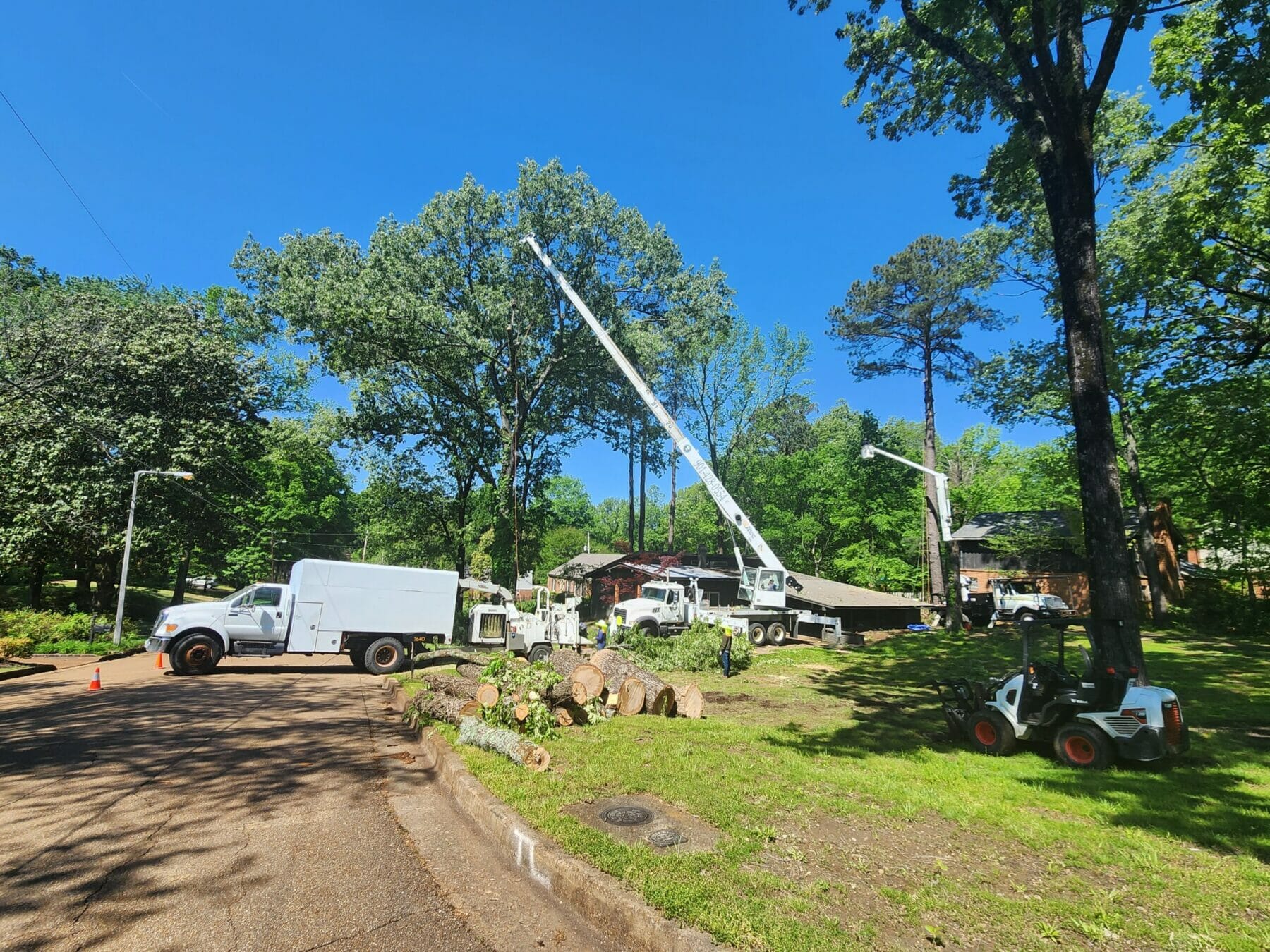
T & J Tree Experts LLC is one of the few tree companies in the Memphis area to utilize crane services. This allows us to tackle those larger and more hazardous tree removals that may have you worried. And our crane operators are experts at what they do. Take a look at our Facebook page where we have multiple videos of our crane operators in action. Each move is precisely calculated. Because of our crane services, we often get clients who are turned away from other companies. We can fully handle tree removals, tree pruning, and emergency tree removals, no matter the size or location.
Usually not, if it’s your tree on a typical home lot. In the City of Memphis, homeowners can generally take down a tree on their own property without a city permit. A few situations change that. Homes in historic districts may need extra review. The strip between the sidewalk and the street is public right-of-way, so the city gets a say in what happens to trees there. Collierville exempts residential lots of an acre or less and dead, dying, or structurally unsound trees. Germantown has its own rules for trees on residential lots, so check with the city before planning to remove one. Your homeowners association might want to sign off too, especially on a big tree. And if a tree has grown into the power lines, leave it for Memphis Light, Gas and Water (MLGW).
Look up, and then look down. Mid-South trees take a beating from summer thunderstorms, straight-line winds, and the occasional ice storm, so a slow lap around the yard every spring and fall is time well spent. Up top, watch for big dead limbs, broken branches hanging in the canopy, and leaves that thin out or brown early. Deep cracks, hollow spots, and a new or worsening lean all signal trouble in the trunk. Then check the ground. Cracked or heaving soil at the base, or mushrooms popping up around the roots, can point to rot you can’t see. Water oaks and Bradford pears grow all over Memphis, and both tend to split apart as they age. Got a questionable tree near the house, the driveway, or the swing set? Have a pro take a look. A good pruning or a set of cables can buy a tree years, though some trees are too far gone and need to come down.
Pretty much any tree job you shouldn’t tackle with a ladder and a borrowed chainsaw. That includes tree removal, trimming and pruning, stump grinding, storm cleanup, and lot clearing for builders. Plenty of local crews also offer tree care services, including inspections, fertilization, pest control, and planting. Our long, humid growing season makes trees here shoot up fast, and older neighborhoods are full of huge oaks standing right next to houses. Taking one of those down safely may require skilled climbers, rigging, or a crane to lower the tree piece by piece. Storm work keeps tree companies busy, too, since wind and ice can drop limbs onto roofs, cars, and roads with little warning. Here’s a good rule of thumb. If a job involves working at height, working near power lines, or cutting anything that could hit your house, call a pro.
Get everyone out of that part of the house first. If someone’s hurt or the ceiling looks like it’s about to give way, call 911. Downed power lines come next. Treat everyone as if they were alive, keep your distance, and report it to MLGW. As tempting as it might be to grab the chainsaw, leave it in the shed. A tree lying on a roof holds a ton of weight and tension, and one bad cut can send it farther into the house. From a safe spot, snap photos of the damage and call your insurance company. After that, reach out to a tree service that handles emergency work and has the right equipment. On large trees, a crane can lift the trunk straight off the roof rather than dragging it across the roof. Once the tree’s gone, a roofer can tarp the hole and keep the rain out until repairs start.
For most trees, late fall through winter is the sweet spot. Once the leaves drop, you can see every branch, and a dormant tree handles cuts with less stress and less risk of pests or disease moving in. Oaks deserve a little extra care. Many arborists skip pruning them in spring and early summer because fresh cuts can attract beetles that spread oak wilt. Then there are crape myrtles, which show up on nearly every street in town. Give them a light trim in late winter and resist the urge to chop them down to stumps, because that “crape murder” look leaves weak, knobby growth. Dogwoods set their spring blooms on old wood, so wait until right after they flower. Dead, broken, or hanging limbs don’t follow the calendar, though. Deal with those as soon as you spot them.
FAQs reviewed by Junior Trejo, owner of T&J Tree Experts, a local tree service.
Copyright © T&J Tree Experts LLC